How an Epoxy Garage Floor Job Runs
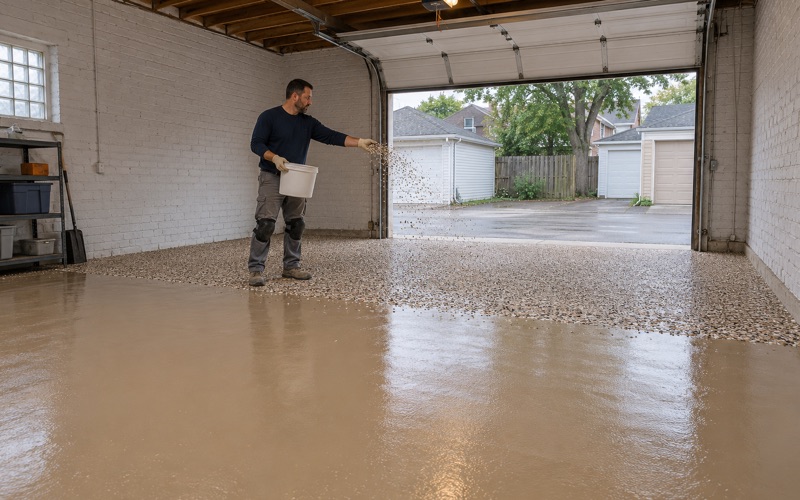
An epoxy garage floor starts with a walk of the slab, a moisture reading and a look at every crack, then a written proposal naming the system. On install days we grind, repair, apply a 100% solids base coat, broadcast flake if chosen, and finish with a wear-rated topcoat, then hand back the keys with a written timeline for foot and vehicle traffic.
Detached Alley Garages Behind Berwyn Bungalows
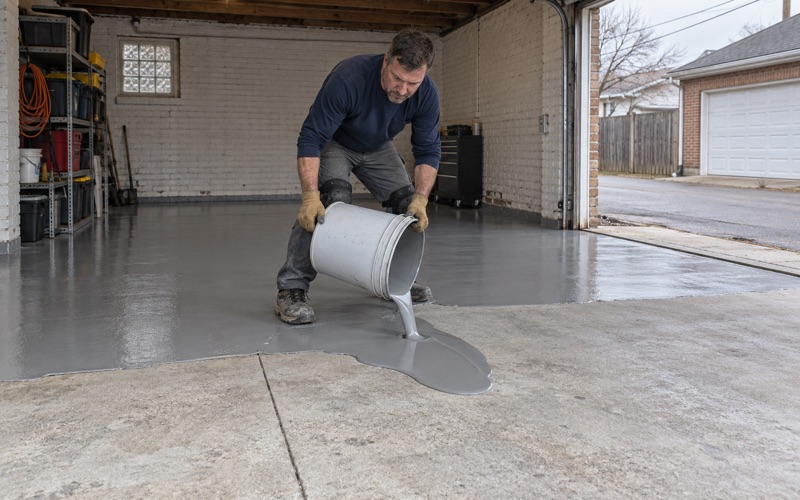
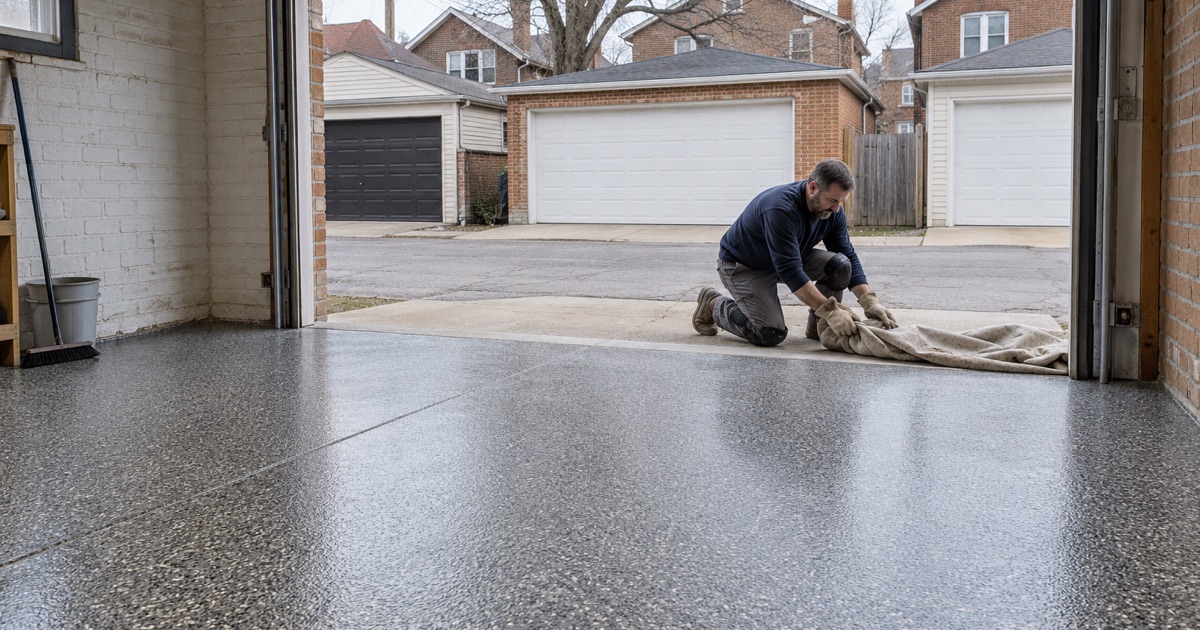
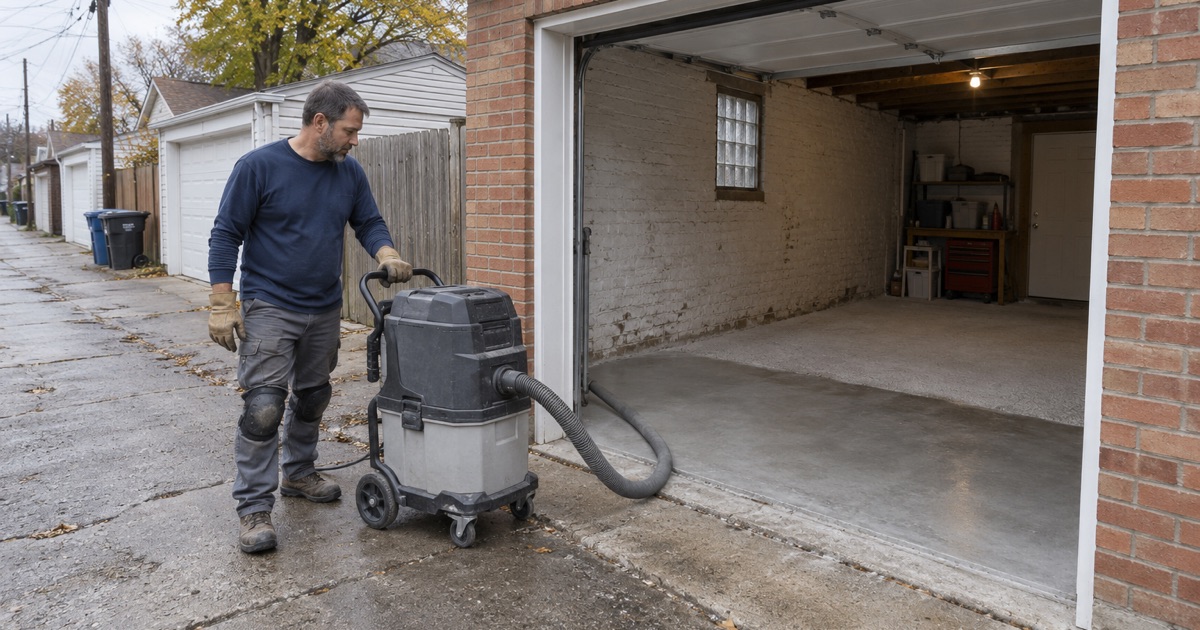
Most homes in the bungalow neighborhoods have a detached one- or two-car garage facing the alley, and that is where our crew sets up. Equipment, vacuums and material stay in the alley footprint, so the yard, the gangway and the house stay untouched while the floor is ground and coated.
Diamond Grinding the Slab Open
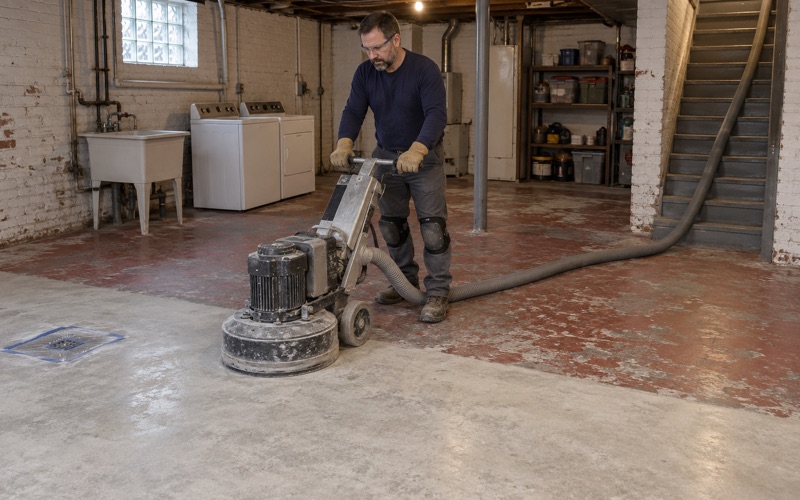
A coating can only grip what it touches, and on an old garage floor that is usually a layer of paint, sealer or oil-soaked cream. Grinding removes it down to sound concrete and leaves a texture the epoxy bites into, which is why a coating rolled over sealed or painted concrete lifts in sheets once hot tires start pulling on it.
Garage Slab Moisture Testing
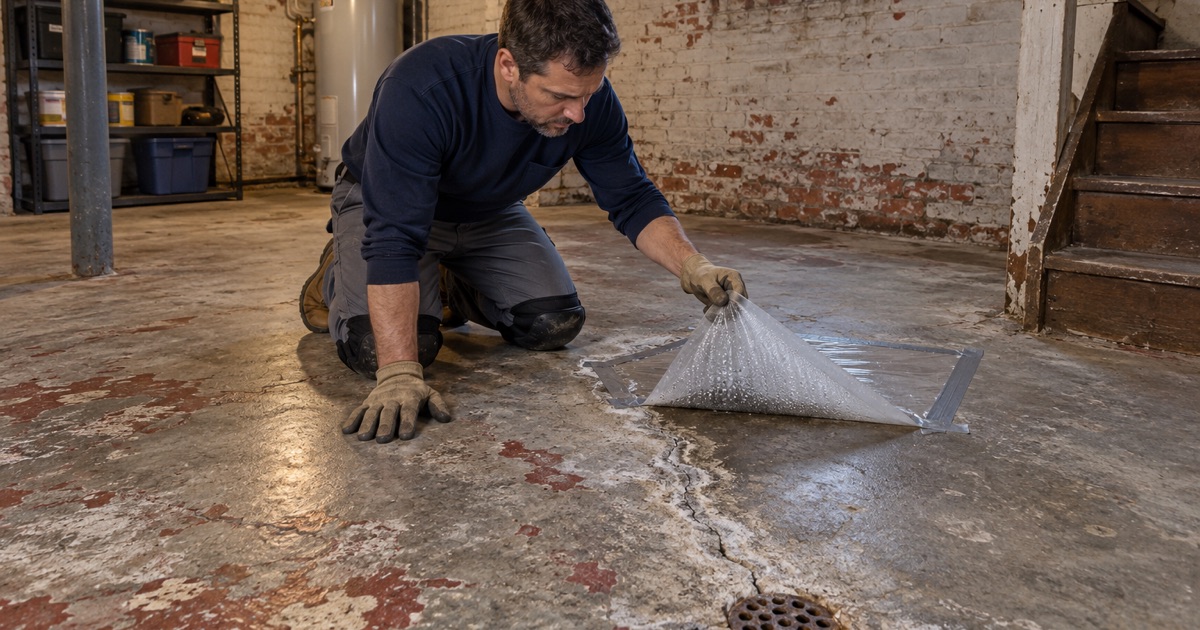
Older garage slabs were often poured straight on the soil with no vapor retarder, and today’s building code still lets a detached garage skip one. We test with an ASTM F2170 relative humidity probe or an ASTM F1869 calcium chloride kit, and read the result against the ASTM F710 guidance of 75 percent relative humidity or 3 pounds per 1,000 square feet per day.
Reading the Cracks Before Quoting
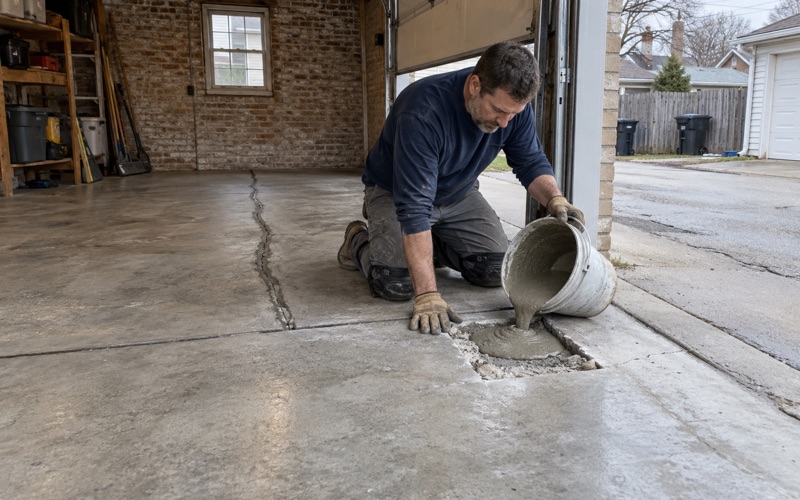
Hairline shrinkage cracks are routine and get filled and ground flush as part of the job. Cracks with one side higher than the other, slabs that rock underfoot, or floors sinking toward the drain point to soil movement under the concrete, and a coating will crack right along with them, so we tell you when the slab should be replaced first.
Calcium Chloride Brine and Rock Salt
The brine Cook County crews spray on roads dries on your car and drips off as a salty slush every time you pull in. On bare concrete it soaks in, recrystallizes and pops the surface in flakes, which is the scaling you see near the garage door, and a sealed resin floor keeps it on top where a squeegee can move it out.
Coating in a Cook County Winter
Epoxy needs slab temperature and the dew point spread at the surface inside the product’s window to cure hard. A heated garage can be coated in January, but an unheated detached garage spends much of the winter too cold, and we would rather book you for April than leave a soft floor that never fully cures.
Hot Tire Pickup and Topcoat Choice
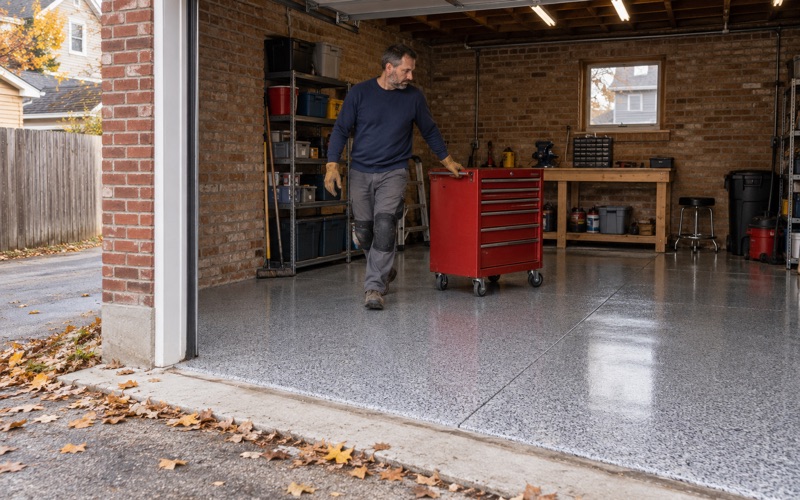
A tire coming off a highway run is hot enough to soften a weak coating, and when it cools it can bond to the surface and pull a patch away as you back out. Proper grinding, a full-strength 100% solids base and a polyaspartic or urethane topcoat are what stop hot tire pickup, not a thicker coat of paint.
Kits Versus a Professional Epoxy Floor
A hardware store kit is a water-based coating a few mils thick, applied after an acid wash with a roller. A professional system starts with mechanical grinding, uses a 100% solids epoxy and a separate topcoat, and builds a film many times thicker, which is the difference between a floor that peels in a season and one that holds.
Epoxy Garage Floor Cost Drivers
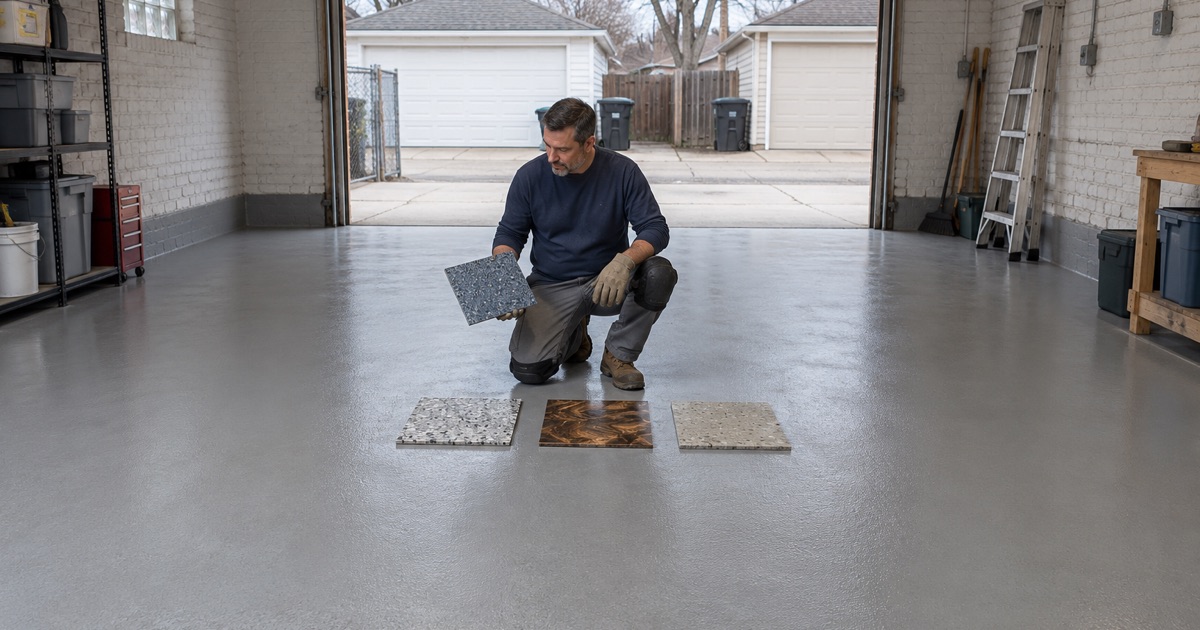
The price of a garage floor moves on preparation more than on size. Removing old paint, repairing spalls and cracks, adding a moisture-mitigation primer, and the choice between solid color, partial flake and full broadcast flake account for most of the difference between two quotes on the same two-car garage.
Coating Warranty Exclusions
Nearly every manufacturer warranty excludes failures caused by moisture vapor from the slab, along with structural cracking, chemical spills left standing, and damage from snowplow blades or steel jack stands. We put that list in front of you at the estimate, moisture first, so the coverage is understood before the work starts.